Beyond the Exhibition Stand: Turning International Trade Fairs into Sales Opportunities
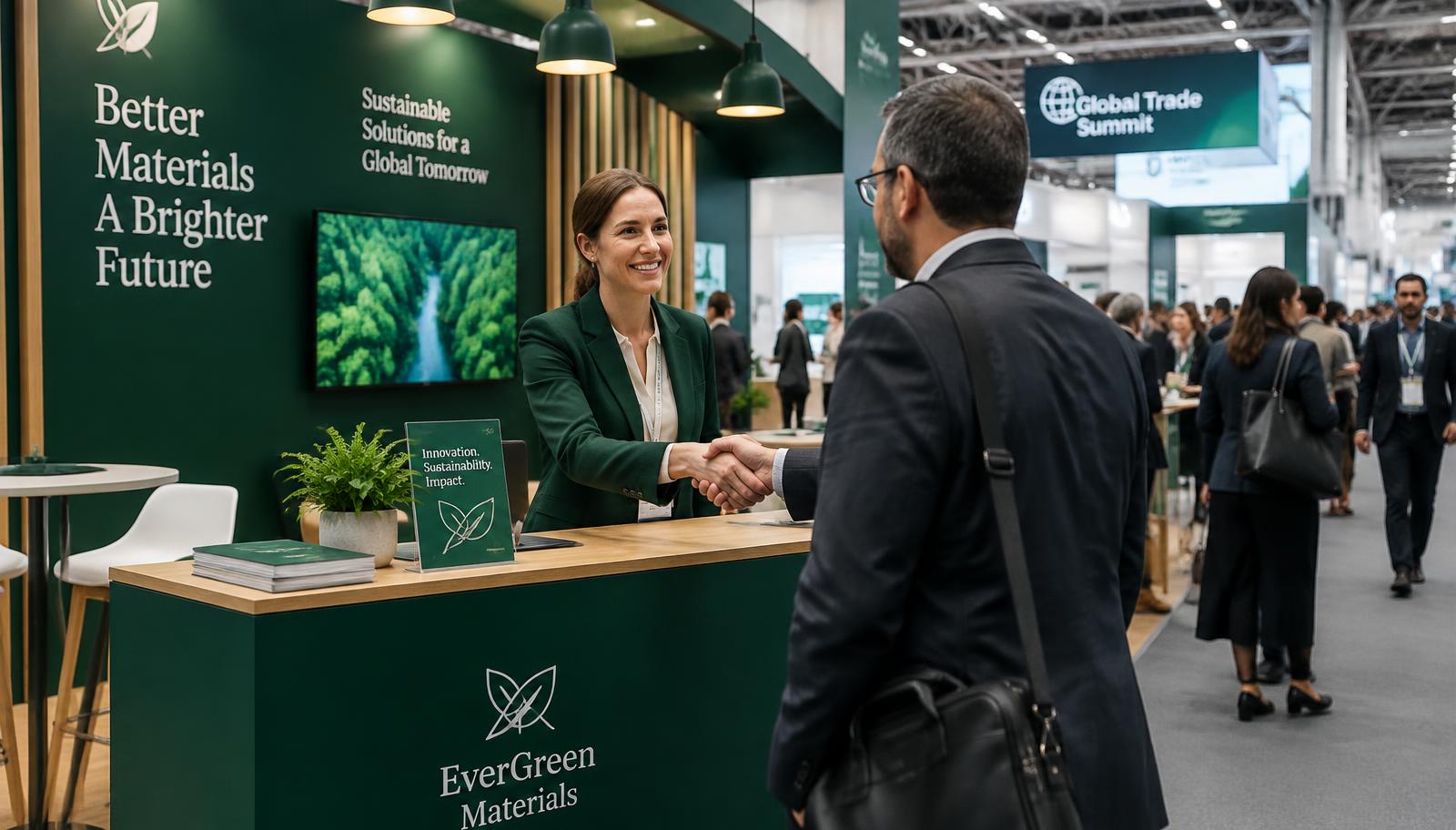
International trade fairs remain an important commercial channel for manufacturers, consumer brands, technology companies and businesses looking to establish relationships with overseas buyers and distributors.
They provide access to industry decision-makers, market intelligence, potential commercial partnerships and opportunities to strengthen international brand visibility.
However, participating in an exhibition does not necessarily generate meaningful commercial results.
For many businesses, trade fairs represent a substantial investment in exhibition space, travel, marketing materials and staff time, without a clearly defined strategy for converting that investment into revenue.
At Entrepreneurs Office, we approach international trade fairs as part of a wider market entry and sales development strategy, rather than as isolated marketing activities.
1. Selecting the Right International Trade Fair
The first strategic decision is identifying which exhibitions offer access to the company's target customers and commercial partners.
Founders should evaluate:
- The profile of participating companies.
- The number and quality of relevant professional buyers.
- The presence of distributors and procurement teams.
- Geographical representation.
- Industry relevance and specialisation.
- Competitor participation.
- Opportunities for commercial meetings and networking.
- Overall participation costs.
The largest or most prestigious exhibition is not necessarily the most commercially effective.
A smaller, highly specialised event may provide more relevant access to decision-makers and generate stronger commercial opportunities.
2. Defining Commercial Objectives
Before committing to exhibition participation, businesses should establish clear commercial objectives.
These may include:
- Identifying potential international distributors.
- Securing meetings with retail buyers.
- Generating qualified B2B sales opportunities.
- Establishing manufacturing or commercial partnerships.
- Validating demand in a new market.
- Understanding local pricing and competitive positioning.
- Launching a product to a specific professional audience.
Different objectives require different preparation strategies.
A company seeking distributors will need different commercial materials and meeting priorities from a business looking to secure direct customer orders.
Clear objectives allow the company to evaluate whether the exhibition has delivered meaningful results.
3. Assessing the Commercial Investment
Trade fair participation should be evaluated as a commercial investment rather than simply a marketing expense.
The total cost may include:
- Exhibition registration and stand rental.
- Stand design and construction.
- Product transportation and samples.
- Travel and accommodation.
- Staff and specialist support.
- Marketing and promotional materials.
- Pre-event prospecting.
- Post-event business development.
Founders should estimate how much additional revenue or contribution profit would be required to justify the investment.
For example, a company investing £15,000 in an international exhibition and operating with a 40% contribution margin would need approximately £37,500 in additional attributable sales to recover the exhibition investment, assuming no other incremental costs.
This illustrative calculation helps establish commercially realistic expectations.
4. Preparing an International Sales Proposition
Before attending an exhibition, businesses should ensure their commercial offering is appropriate for the target market.
For product-based businesses, preparation may include:
- International wholesale and retail pricing.
- Minimum order quantities.
- Distribution terms.
- Product certifications and compliance information.
- Production capacity and delivery timelines.
- Product catalogues and samples.
- Logistics and payment arrangements.
For technology and service-based businesses, preparation may include:
- A clearly defined value proposition.
- Relevant demonstrations and presentations.
- Client case studies.
- Commercial proposals.
- Partnership models.
- Technical and implementation information.
Exhibition participation should not begin before the company is sufficiently prepared to respond to genuine commercial interest.
5. Building a Sales Pipeline Before the Exhibition
One of the most significant opportunities for improving trade fair performance is to begin commercial development before the event itself.
A structured preparation process may start six to eight weeks before the exhibition.
This can include:
- Researching relevant exhibiting companies and expected buyers where information is available.
- Identifying priority distributors, retailers and commercial partners.
- Building a database of target organisations and decision-makers.
- Conducting personalised email and LinkedIn outreach.
- Scheduling meetings in advance.
- Sharing relevant product information and commercial propositions.
The objective is to arrive at the exhibition with an existing schedule of commercially relevant meetings rather than relying exclusively on spontaneous interactions.
Advance preparation maximises the value of time spent at the event and increases the likelihood of meeting relevant decision-makers.
6. Managing Commercial Activities During the Event
During the exhibition, companies should focus on identifying and developing genuine commercial opportunities.
This requires more than collecting business cards or recording visitor numbers.
Sales conversations should establish:
- The prospective customer's business model.
- Their current suppliers or commercial requirements.
- Their purchasing authority.
- Potential order volumes.
- Product or service requirements.
- Commercial timelines.
- Relevant decision-making processes.
Each opportunity should be documented and categorised according to its commercial potential and readiness.
Businesses may also choose to use part of the exhibition as a market research opportunity, collecting insights into competitor offerings, pricing, buyer expectations and distribution models.
7. Turning Exhibition Contacts into Commercial Opportunities
The commercial value of a trade fair is often determined by what happens after the exhibition.
Without a structured follow-up process, promising contacts can quickly lose momentum.
A post-event sales programme should include:
Within the First 48 Hours
- Organise and categorise commercial contacts.
- Send personalised follow-up communications.
- Provide requested product or service information.
- Confirm agreed next steps.
Within the First Two Weeks
- Arrange commercial meetings.
- Send samples and proposals.
- Evaluate distributor and partnership opportunities.
- Address technical and commercial questions.
- Qualify the most promising prospects.
Within the First 30–90 Days
- Progress negotiations.
- Discuss pricing and contractual arrangements.
- Conduct trial orders or pilot projects.
- Develop distribution agreements.
- Monitor sales pipeline progression.
- Maintain relationships with longer-term opportunities.
The follow-up programme should be integrated into the company's CRM and commercial management processes.
8. Evaluating International Distributors and Commercial Partners
Trade fairs often provide opportunities to connect with potential overseas representatives and distribution partners.
However, selecting the right partner requires careful commercial assessment.
Businesses should evaluate:
- Existing customer relationships.
- Relevant industry experience.
- Financial stability.
- Geographical and channel coverage.
- Sales and marketing capabilities.
- Existing product portfolio.
- Potential conflicts of interest.
- Ability to support the brand's positioning.
Distribution agreements should also establish appropriate commercial expectations, responsibilities, performance targets and contractual protections.
Granting exclusivity without sufficient due diligence or clearly defined performance obligations can restrict future market opportunities.
9. Measuring Trade Fair Return on Investment
Exhibition success should be assessed using commercial indicators rather than visitor numbers alone.
Relevant performance measures include:
- Qualified commercial leads.
- Meetings with target decision-makers.
- Sales pipeline value generated.
- Proposals and negotiations.
- Trial orders and contracts signed.
- Distribution agreements established.
- Attributable revenue and contribution profit.
- Cost per qualified opportunity.
Because international B2B sales can involve extended purchasing cycles, trade fair performance may need to be assessed over several months.
Separating early pipeline indicators from actual financial returns provides a more accurate picture of the exhibition's impact.
10. Integrating Trade Fairs into the International Growth Strategy
Trade fairs are most effective when they form part of a continuous commercial development programme.
A well-designed international sales strategy may combine:
- Market research and customer segmentation.
- Digital commercial positioning.
- Targeted outbound business development.
- Industry exhibitions and trade fairs.
- Distributor and partner development.
- International e-commerce.
- Ongoing sales pipeline management.
Within this broader framework, exhibitions become opportunities to accelerate commercial conversations, strengthen existing relationships and access new markets.
The exhibition itself is not the strategy. It is one of the channels through which the strategy is executed.
How Entrepreneurs Office Can Support Your International Trade Fair Strategy
Entrepreneurs Office supports manufacturers, consumer brands and international businesses in developing commercially focused exhibition and market entry strategies.
Our support can include exhibition selection, commercial preparation, international pricing, buyer and distributor identification, pre-event business development and post-event sales pipeline management.
Where required, we assemble and coordinate specialist teams covering marketing, exhibition preparation, commercial representation and operational implementation.
Our objective is to help businesses transform international exhibition participation into measurable commercial opportunities and long-term market relationships.
If your company is planning to participate in an international trade fair or looking to develop new export markets, Entrepreneurs Office can support you before, during and after the exhibition, ensuring that participation forms part of a structured international growth strategy.